
stac-zap:为 STAC 目录带来自然语言搜索能力
在空间数据领域,STAC(SpatioTemporal Asset Catalog)规范已经成为组织和发现地理空间资产的重要标准。然而,对于许多用户而言,在多个 STAC 目录之间精准定位所需数据仍然是一项颇具挑战的任务。Development Seed 近日发布了一款名为 stac-zap 的原型工具,试图用自然语言搜索来改变这一现状。 stac-zap 构建在 stac-map 之上,核心能力是跨 STAC 目录的自由文本搜索。用户只需在搜索栏中输入一段描述性请求,系统便能自动完成目录与集合的选择、地理位置的识别,以及日期和云量等参数的设定。整个过程无需用户手动构建复杂的查询条件,搜索结果会直接更新应用状态,并由 stac-map 完成可视化呈现。
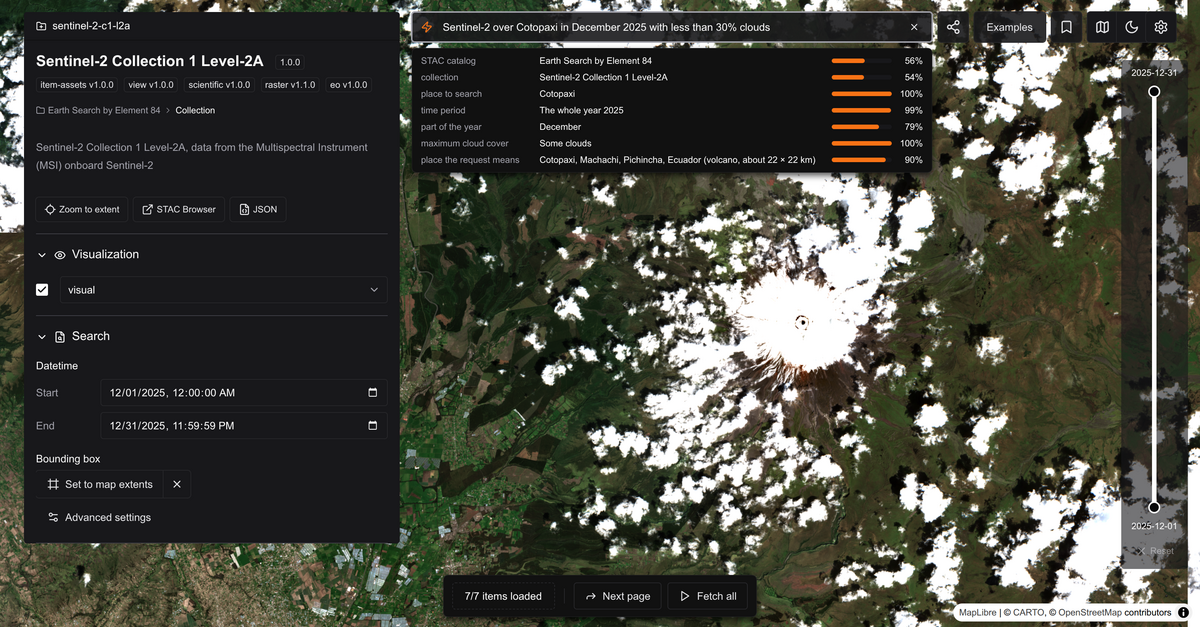
这一功能背后的关键组件是 Jev。Development Seed 的 Daniel Wiesmann 在 LinkedIn 上介绍称,Jev 并不生成自由文本,而是从预先存在的选项中进行选择——包括真实的目录、集合和地点。这意味着每一次搜索都会生成一个有效的 STAC 查询,避免了自然语言生成中常见的歧义和错误。 Jev 在将搜索请求转化为结构化查询方面做出了一个有趣的技术选择。与通用大语言模型不同,Jev 基于预先指定的输出类型工作,因此始终以可预测的格式返回结果。这种设计使其更适合自动化任务,也更容易集成到需要稳定输出的生产流程中。 将模糊的请求转化为具体的结果,正是 AI 最有价值的应用场景之一。现实中,人们往往并不清楚自己究竟在寻找什么,或者不知道数据存放在哪里,尤其当数据分散在多个目录中时,这一问题更加突出。stac-zap 的出现,让用户可以用最自然的方式表达需求,而无需了解底层目录结构。 当然,这一方案也有其边界。目前,stac-zap 依赖经过精心整理的源列表,例如它使用的 STAC Index 或 Portolan 注册表。Jev 只能从它已知的目录中进行选择。换句话说,AI 让搜索变得更简单,但搜索结果的质量仍然取决于源数据的质量。没有良好的数据目录,再智能的搜索也无从发挥。 总体而言,stac-zap 展示了 AI 在空间数据发现领域的一种务实应用路径:不追求生成式的自由发挥,而是将语言理解能力约束在结构化选项之内,从而在易用性与可靠性之间取得平衡。对于需要频繁检索 STAC 目录的研究人员和开发者来说,这无疑是一个值得关注的方向。 如果你对 stac-zap 的技术实现细节感兴趣,包括 Jev 如何解析请求、如何与 stac-map 协同工作,以及未来可能的扩展方向,欢迎点击原文链接查看完整介绍。
编译自 Lat Long Blog,原文链接
原文摘要
stac-zap: Free-Text Search for STAC Catalogues
Link: developmentseed.org Cool new prototype from Development Seed: stac-zap builds on top of stac-map and integrates free-text search across STAC catalogues. Describe the data you need, get results. Daniel Wiesmann, writing on LinkedIn: You type one request in the search bar, and Jev picks the catalog and the collection, finds the place in your request, and sets the dates and the cloud cover. Jev does not write text: it only selects from options that exist, such as real catalogs, collections and places, so every search is a valid STAC query. The answers update the app state, and stac-map shows the result. Jev is an interesting choice for translating the search request into a structured query. Unlike general-purpose LLMs, Jev works from pre-specified output types, so it always returns results in a predictable format, which makes it a better fit for many automation tasks Turning fuzzy requests into tangible results is one of the better uses of AI. People often don’t know exactly what they’re looking for, or where to find it, especially when the data is spread across several catalogues. Right now, this still needs a well curated list of sources like STAC Index, which stac-zap uses, or the Portolan registry. Jev can only pick from catalogues it knows. AI makes searching easier but the results are only as good as the source data.